
Custom Injection Molding Services for Custom Parts
Accelerate your product development with custom injection molding—plastic prototypes and production parts delivered in as little as one day. Get a quote instantly.
- No minimum order quantity
- 10K+ injection moldings MADE MONTHLY
- 100+ PLASTIC & METAL MATERIALS
- OEM & ODM Supported

STEP | STP | IGS | IGES | PRT | SLDPRT | SAT | X_T | PDF | CAD | & JPG With Product Detailed Size
Maximum file size: ≤15MB. Max. Files
All Uploads Are Secure And Confidential.
Trusted


Injection Molding Processes
Quickly move from prototyping to on-demand production with BaoSheng’s high-quality molded parts. Enjoy a free prototyping tool when upgrading to on-demand manufacturing, plus expert design consultation to speed up production, ensure part consistency, and simplify qualification.

Plastic Injection Molding
The most common method for producing precise, complex plastic parts at scale with thermoplastics.

Metal Injection Molding
A high-precision process for producing complex metal parts in large volumes using metal powders and binders.

Overmolding
A process that fuses multiple materials or colors into one part, perfect for complex, high-quality components at scale.

Insert Molding
A process that molds plastic around pre-placed inserts, creating strong, precise parts ideal for large-scale production.

Liquid Silicone Rubber Injection Molding
Ideal for producing soft, flexible parts like silicone seals for medical devices and electronics.
Contact Us To Custom Sheet Metal Fabrication
Injection Mold Tooling capability
| Standards | Description |
| Maximum Part Size | 1200×1000×500 mm |
| Manimum Part Size | 5×5×5 mm |
| Part to Part Repeatability | + / – 0.1 mm |
| Mold Cavities | Single-cavity molds, multi-cavity molds, family molds |
| Available Mold Types | Steel and aluminum molds. Production levels below 1000, 5000, 30000, and over 100000 uses |
| Mold Cavity Tolerances | + / – 0.05 mm |
| Secondary Operations | Mold texturing, pad printing, laser engraving, threaded inserts, and basic assembly |
| Undercuts | Y-type, L-type undercuts |
| Wall Thickness | 0.5 mm to 5 mm |
| Draft | 0.5° to 2° |
| RIbs/Gussets | 0.5 mm to 3 mm thick |
| Bosses | Diameter 3 mm to 10 mm |
| Lead Time | Most orders can be completed within 15 working days |
Surface treatment

Standard
The moldmaker selects the surface finish, typically SPI B-2, depending on part geometry and draft angles. Interior or non-cosmetic surfaces are generally left as-machined.
SPI Finishes
Available SPI finishes range from Grade 3 diamond/high polish to 320 stone low polish, including SPI A-1 to A-3, B-1 to B-3, C-1 to C-3, and D-1 to D-3.
MoldTech Finishes (Mold Texturing)
Available finishes include matte, swirls, lines, and patterns. Common textures are MoldTech MT11010, MT11020, and MT11030, with additional custom textures available upon request.
Other Textures - VDI
VDI 3400 Surface Finish, set by the Society of German Engineers (VDI), defines mold texture standards. Typically created using EDM, it produces fine to coarse matte finishes.
As Molded
No secondary polishing or grinding is performed; tooling marks will remain visible on the part.
Threaded Inserts
Standard inserts in UNF and metric sizes can be installed upon request.
Pad Printing
2D images can be transferred onto 3D parts, subject to review.
Laser Engraving
Engrave part numbers, logos, and more onto your parts.
Assembly
Silver provides excellent solderability and electrical conductivity but can tarnish on sheet metal parts. Complies with AMS QQ-S-365D, with a typical thickness of 0.00002″ to 0.0003″.
Injection Molding Materials
We offer over 100 thermoplastic and thermoset materials. For alternative options, see our guide to resin substitutes for ABS, PC, PP, and other common molded plastics.
Thermoplastics
- ABS
- Acetal
- Acetal Copolymer
- Acetal Homopolymer/Delrin
- ETPU
- HDPE
- LCP
- LDPE
- PETG
- PMMA (Acrylic, Plexiglas)
- Polycarbonate
- Polypropylene
- PPA
- PPE/PS
- PS
- PSU
- TPU
- LLDPE
- Nylon
- PBT
- PC/ABS
- PC/PBT
- PEEK
- PEI
- PET
Thermosets
- Standard silicone (30, 40, 50, 60, and 70 durometers)
- Medical-grade silicone
- Optical-grade silicone
- Fluorosilicone (fuel and oil resistant)
Why Choose BaoSheng for Custom Injection Molding?
Fast Turnarounds
Accelerate your product development—receive high-quality injection-molded parts in days, with some orders shipping in as little as 24 hours.
Design for Manufacturing Insights
Every quote includes expert review of your 3D CAD files. We highlight potential challenges such as undercuts, insufficient draft, or complex features to ensure smooth molding.
No Minimum Order Requirements
Order parts on demand without MOQs, enabling flexible production for market fluctuations, bridge production, emergency line-downs, or customized runs.
Proven Injection Molding Expertise
From prototyping to full production, BaoSheng provides guidance on finishing options, inspection, and quality assurance to streamline your project from start to finish.

Advantages of Injection Molding
Injection molding is a versatile process for producing high-quality plastic parts at scale. It supports both prototyping and low- to high-volume production, with aluminum tooling making small runs cost-effective.
Cost-effective for larger volumes
Excellent part cosmetics and surface finish
High repeatability
Capable of complex geometries
Low scrap rates
Wide range of thermoplastic and thermoset materials


Injection Molding Applications
Injection molding is widely used to produce plastic parts across medical, consumer, and automotive industries. Common applications include:
Housings
Brackets
Gears
Single-use medical devices
Electrical connectors
Syringes
Containers
Related Resources
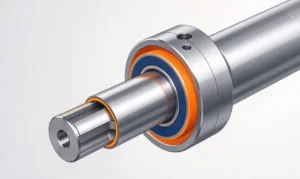
Retaining Ring Groove Design: Dimensions, Endplay and CNC Drawings
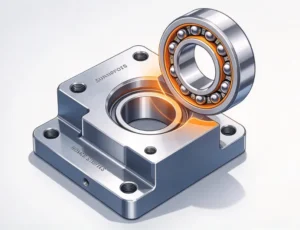
Bearing Housing Bore Tolerance: Fit Selection and CNC Drawing Requirements
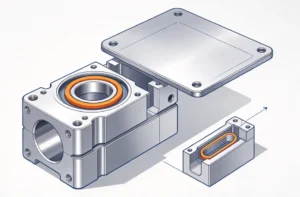
O-Ring Groove Design for CNC Face Seals: Squeeze, Fill and Tolerances
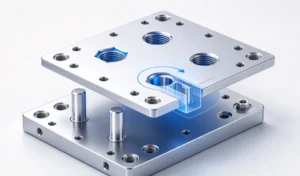
Dowel Pin Hole Tolerance: Preventing Two-Pin Assembly Binding
FAQs
What is injection molding?
Injection molding is a manufacturing process where molten plastic is injected into a mold to produce high-precision, complex parts at scale.
What materials are used in injection molding?
Common materials include thermoplastics such as ABS, PC, PP, and thermosets, as well as specialty materials for medical or high-performance applications.
What are the advantages of injection molding?
High repeatability and precision
Cost-effective for large volumes
Capable of producing complex geometries
Excellent surface finish and part aesthetics
Low scrap rates
Which industries use injection molding?
Injection molding is widely used in medical, automotive, electronics, consumer goods, and packaging industries.
What types of parts can be made?
Typical parts include housings, brackets, gears, syringes, electrical connectors, and containers.
What is the typical lead time for injection molded parts?
Lead times can range from a few days for prototyping runs to a few weeks for full production, depending on complexity and volume.
Can small production runs be economical?
Yes. Aluminum tooling and modern processes allow cost-effective low-volume production and prototyping without large minimum order quantities (MOQs).